
A Showhouse Stunner Worth the Drive
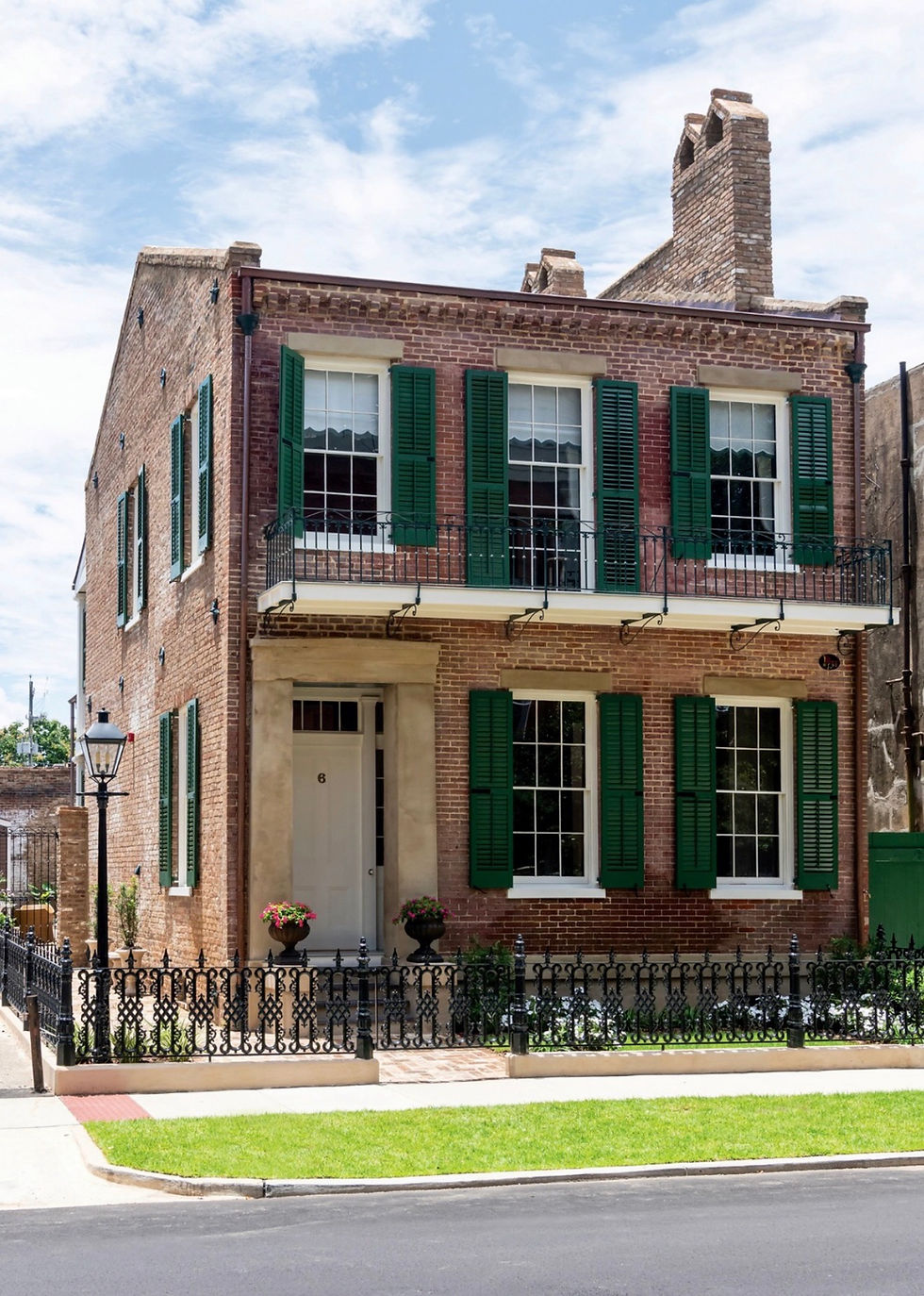
Some spaces make your heart skip a beat the moment you walk in, even when they aren’t pristine and polished. They have something that can't be manufactured: history, soul, and character. The Chighizola House in downtown Mobile, Alabama has a charm that cannot be manufactured, even when it stood empty, with exposed plaster-and-lath construction waiting to be restored to its former glory. Maybe it’s the years of art and architecture history I logged in college, but experiencing a building so well-preserved before it was restored was equally as thrilling for me as it has been to pour love and creativity into the project that followed after that first walk-through. We’ve been quietly working alongside Rogers & Willard, Cay Construction, and eight other design teams for almost two years to transform it into the 2026 Mobile Bay Magazine Inspiration Home.

I needed no convincing when Mobile Bay Magazine offered us a room in the showhouse. I love a historic home more than just about any other type of space, and the challenge posed to us was intriguing: restore the room to reflect a specific period of its history, but modernize it so that it can function as an event space after the showhouse closes. Honor the past, but appeal to the present. My creative wheels were spinning!
A Little History Lesson

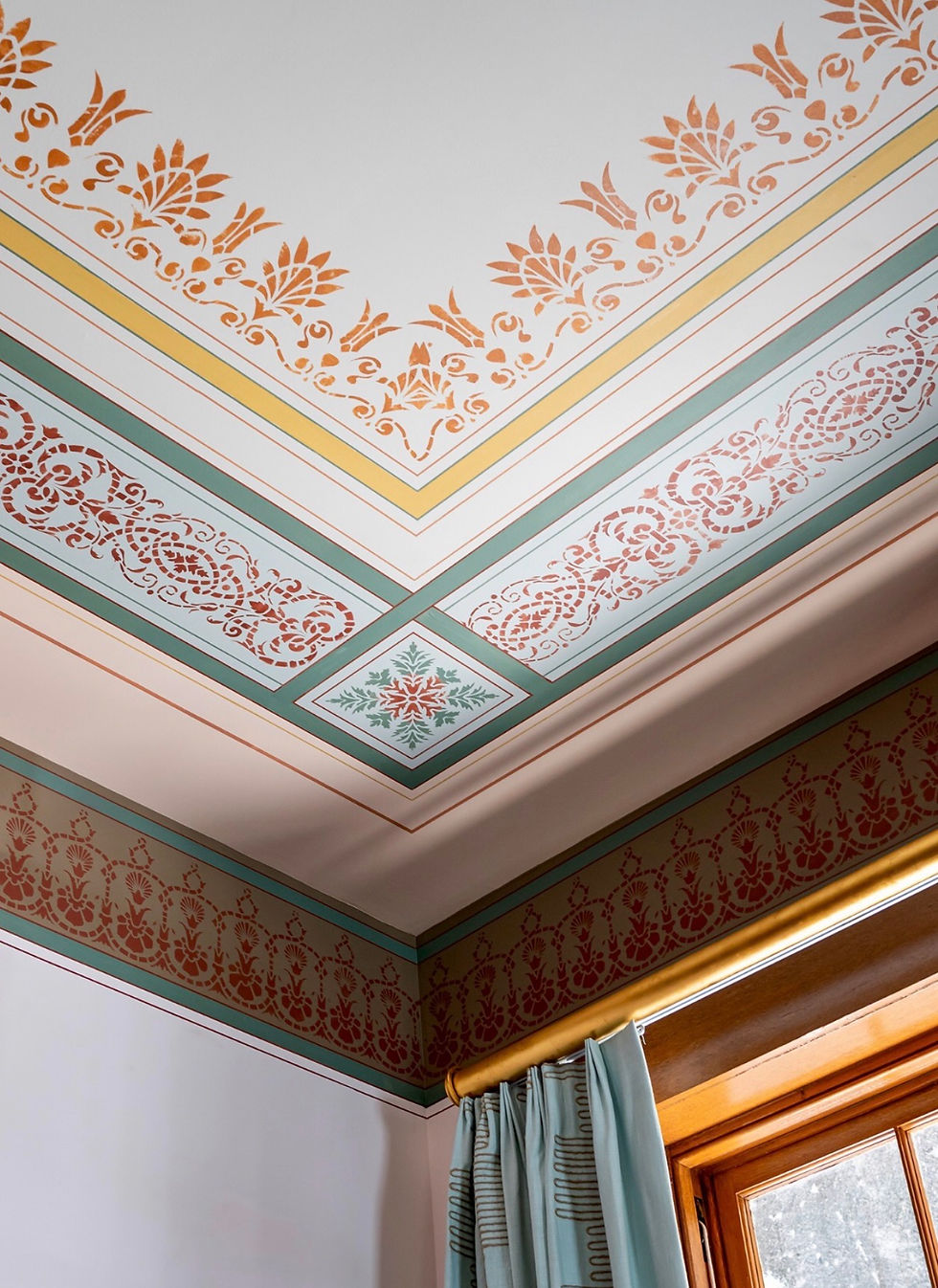
Built in the 1840s during one of Mobile's most prosperous eras, the Chighizola House is a Greek Revival side-hall townhouse that has survived nearly two centuries with its original details largely intact. We’re talking about the kind of beauty that simply doesn’t exist in most new construction: solid wood doors, stenciled designs painted on the ceilings, and hand-milled moldings.

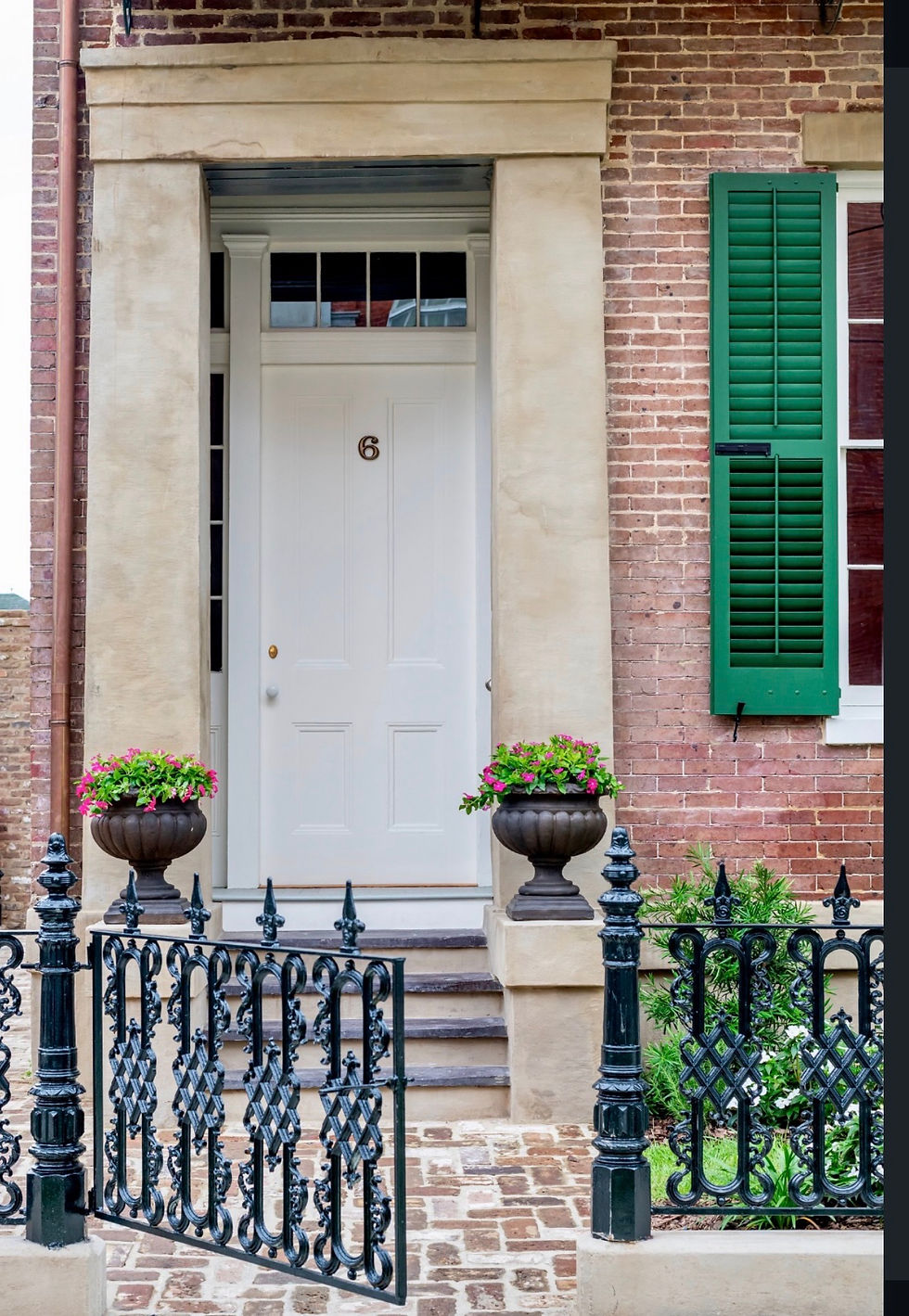
For years, the house sat on preservation watchlists, its future uncertain. It was eventually purchased and rescued by Cay and Mike Rogers (two absolute gems of human beings), whose commitment to honoring the home's original character while carefully restoring it set the tone for everything that followed. The result is a space that feels like a portal into another time and place.

Our Approach
This house deserved to be treated with respect and care, and that's exactly what we set out to do. Our role was to bridge the historic elegance of a formal space with the contemporary function needed for a world driven by algorithms and Instagrammable moments.
Since the Greek Revival home emphasizes simplicity, grandeur, and symmetry, while drawing inspiration from classical design elements, our choices needed to reflect the concept of both old and new living side-by-side.

On the preservation side, stenciled designs on the ceiling were slated to be re-created by talented artisans. I pulled our color palette directly from that design, choosing Farrow & Ball’s Tailor Tack (a soft blush) as our wall color. My goal was not to design a museum-like space that felt like a replica of a room from the 1800s. Instead, I looked to other design precedents that followed the historic-preservation-to-modern-event-space model, such as The St. Francisville Inn here in Louisiana and The 1874 Guest House in Galveston, Texas. These spaces gently nod to the history of their respective homes, while still feeling firmly relevant in today’s fast-paced world.
We were fortunate to partner with incredible brands to execute our vision: Currey & Company, Charles Stewart, Fabricut, and The Vale London. These brands represent the lighting, furnishings, textiles, and decorative accessories you’ll see in the parlour. This foundation of more contemporary lines created the most amazing backdrop for the finishing touches we sourced locally at our installation. We scoured Mobile Bay for the collection of paintings, and found them at Antiques On The Loop, Plantation Antiques, and Atchison Home.

It is this marriage of old (oil paintings, a stunning mirror, an antique side chair) with new (the statement cocktail table, a skirted chair, the palm-frond chandelier) that creates a richly layered space. Nothing feels too precious, but there is a sense that you should sit up a little straighter and wear your best dress when you visit.
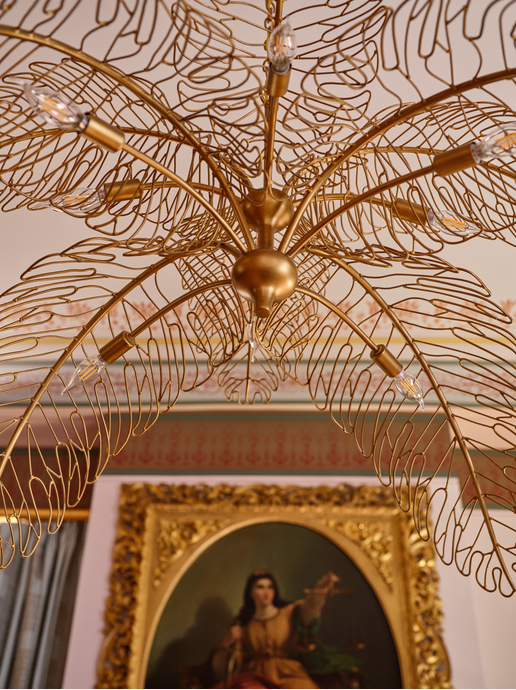
One particular detail that I especially love: the palm leaf chandelier. It might seem odd in a space like this, when a gas chandelier with globes and scrollwork would have been period-appropriate. However, this is my secret wink to the Gilded Age, when escapism took the forefront in interiors, with a heavy focus on tropical locales. Palms specifically were incredibly popular as both indoor house plants and as a design motif. In fact, it wasn’t at all uncommon for a home to have a room dedicated to exotic plants in your home.

The parlour was always the room for showing off. It’s where Victorian families put their best furniture, their best manners, and famously, their plants. A well-placed fern or palm told visitors you had the money to keep something tropical alive indoors and the taste to know exactly where to put it. Palms in the parlour were a full presentation, whispering wealth and worldliness to anyone who stepped through the door.

I knew I wanted that same nod to status and glamour in our front parlour. A brass palm leaf chandelier gave me the shape and symbolism of the original Victorian flex, just reimagined as something permanent, sculptural, and hanging from the ceiling instead of crowding the windowsill.
The In-Person Experience
There is no substitute for experiencing this beautifully designed home in person. These photos capture what it looks like, but they don't capture what it feels like to experience the home: the sound of floorboards creaking underfoot, the heavy weight of solid wood doors, and the sunlight warming the rug in the afternoon. It’s not difficult to imagine hosting friends for tea in the parlour or retiring to a well-appointed bedroom at the end of the day.
The Chighizola House is open for tours through August 30th. If you've been looking for an excuse for one more summer road trip, this is a perfect day trip!
Tickets are available now at https://mobilebaymag.com/. Go before summer closes the door on this one.


“A Showhouse Stunner Worth the Drive” highlights how thoughtful design, beautiful details, and careful craftsmanship can transform a space into something truly memorable. The same attention to detail matters in embroidered artwork, where precision can greatly influence the finished result. Professional best embroidery digitizing services help convert artwork into clean, machine-ready embroidery files with appropriate stitch density, sequencing, underlay, and detail. Whether you are creating logos, custom patches, uniforms, or branded apparel, quality digitizing helps produce sharper and more consistent embroidery. Great design is about combining creativity with technical precision, making professional craftsmanship valuable across both interior design and embroidery projects.